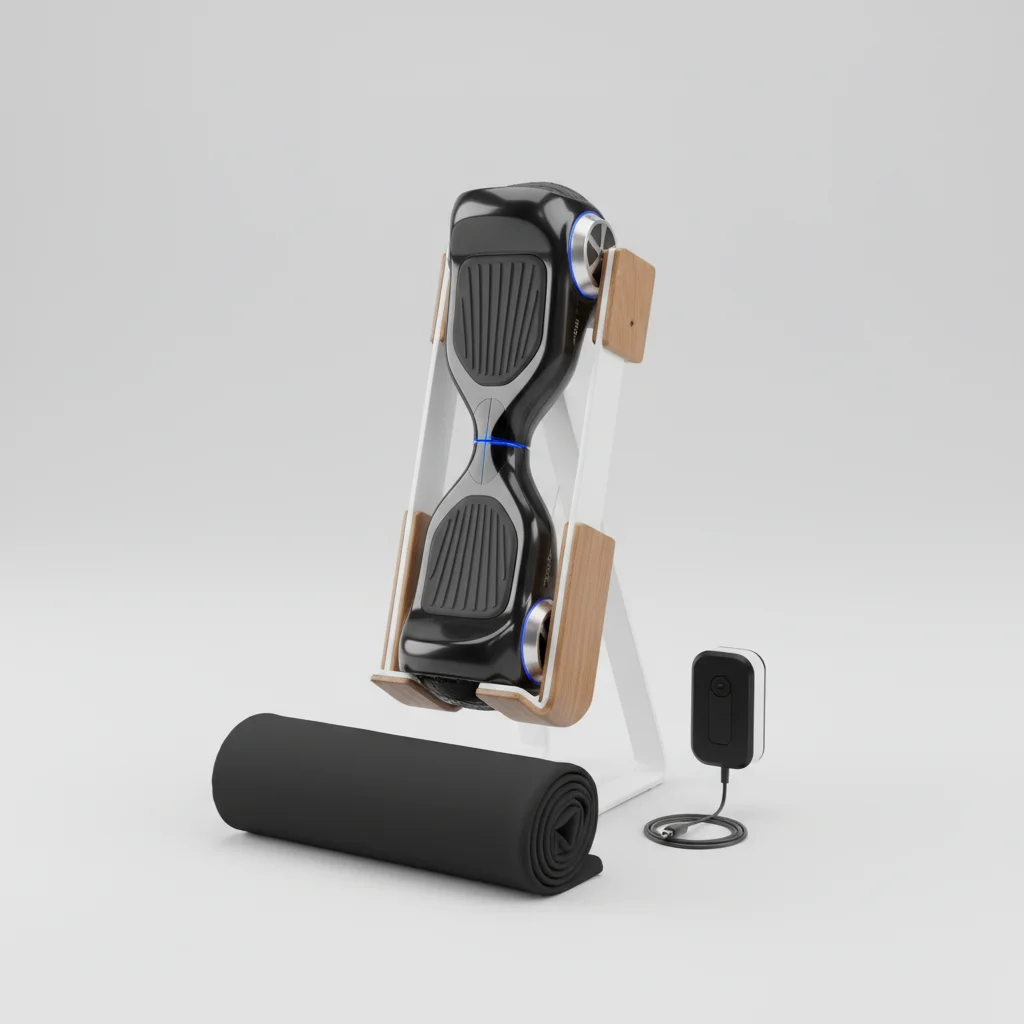
Proper hoverboard storage is crucial for maintaining its longevity and performance, especially when not in use for extended periods. The best way to store your hoverboard indoors involves five key steps: ensuring a partial charge, cleaning the device thoroughly, choosing a cool and dry location, protecting it from physical damage, and periodically checking its battery. Following these guidelines will prevent common issues like battery degradation and cosmetic wear, ensuring your hoverboard is ready for your next ride.
Why Proper Hoverboard Storage Matters
Storing your hoverboard correctly isn’t just about keeping it out of the way; it’s about preserving its sensitive electronic components and battery life. Extreme temperatures, humidity, and physical impacts can significantly shorten the lifespan of your device. A well-stored hoverboard will maintain its charge capacity, respond better to controls, and look newer for longer, saving you money on repairs and replacements in the long run. For compare top hoverboard sales on this site.
Optimal Battery Charge for Storage
Before storing your hoverboard, it’s essential to charge its battery to approximately 50-60%. Storing a hoverboard with a completely full or completely empty battery can lead to battery degradation over time. A full charge can stress the battery cells, while an empty charge can cause deep discharge, making it difficult or impossible to recharge later. Aim for that middle ground to keep the battery healthy during its downtime.
Cleaning Your Hoverboard Before Storage
A clean hoverboard is a happy hoverboard. Before putting your device into storage, take the time to wipe down its exterior, wheels, and footpads. Remove any dirt, dust, mud, or debris that may have accumulated during your rides. Use a damp cloth for general cleaning and a soft brush for hard-to-reach areas around the wheels. Ensure the hoverboard is completely dry before storing it to prevent moisture-related damage or mildew growth.
Choosing the Right Storage Location
|
Our Picks for the Best Hover Board in 2026
As an Amazon Associate I earn from qualifying purchases.
|
||
| Num | Product | Action |
|---|---|---|
| 1 | LIEAGLE Hoverboard, 6.5" Self Balancing Scooter Hover Board with Bluetooth Wheels LED Lights for Kids Adults |

|
| 2 | Hover-1 My First Self Balancing Scooter for Kids with 5 mph Max Speed, Dual 150W Motors, 6.3” Tires, 3 Miles Max Range, and LED Headlights |
|
| 3 | Self Balance Scooter Seat Attachment 6.5” Two-Wheel Self Balancing Electric Scooter with LED Light Flash Lights Wheels |
|
| 4 | INMOTION E20 Electric Unicycle Hoverboard for Beginners – 14" Wheel, 900W Motor, 18.6 Miles Range, 12.5mph, UL2272 Certified – Lightweight & Safe Self-Balancing Scooter |
|
| 5 | 8.5” All Terrain Hover Board, Off Road Self Balancing Scooter with Bluetooth and LED Lights, UL2272 Safety Certified |
|
| 6 | Gyroor Self Balancing Scooters Seat Attachment - Go Kart Conversion for 6.5'' to 10'' Self Balancing Scooters, Adjustable Frame Length, Perfect for Kids and Adults |
|
| 7 | K2 Self-Balancing Scooter Go Kart with Rear Shock Absorption, Balancing Scooter Seat Attachment for 6.5" 8" 10" Tires, Adjustable Length & Off-Road Wheel( (Not Including Balancing Scooter) |
|
| 8 | K1 Go-Kart Seat Attachment for Self-Balancing Scooters, Adjustable Frame Fits 6.5"/8"/10" Boards, Easy Install, Kids & Family Fun (Scooter Not Included)–Classic Black |
|
| 9 | Razor Hovertrax 2.0 Hoverboard, UL2272 Certified Self-Balancing Hoverboard Scooter, for Kids Age 8+ |
|
| 10 | Self-Balancing Scooter Skin Hoverboard Sticker Adult e Scooter Electric Scooter for Adults Reflective |
|
The ideal storage location for your hoverboard is a cool, dry, and stable environment. Avoid places with extreme temperature fluctuations, such as uninsulated garages, attics, or direct sunlight. Basements can be suitable if they are dry and free from humidity. A closet, a dedicated shelf in a living area, or even under a bed can work well. The key is to keep it away from direct heat sources, cold drafts, and excessive moisture.
- Store in a climate-controlled room (e.g., bedroom, living room).
- Avoid direct sunlight exposure.
- Keep away from radiators, heaters, or vents.
- Ensure the area is free from excessive humidity.
- Place on a flat, stable surface to prevent accidental falls.
Protecting Your Hoverboard from Physical Damage
Even when stored, your hoverboard can be susceptible to accidental damage. Consider placing it in its original packaging, a dedicated hoverboard carrying bag, or a sturdy box. This provides an extra layer of protection against bumps, scratches, and dust. If storing on a shelf, ensure it’s not in a high-traffic area where it could be knocked over. For long-term storage, covering it with a breathable cloth can also help keep dust at bay.
For those looking for robust storage solutions or a new hoverboard that comes with excellent protective features, consider exploring options like the. These models often include durable casings or come with recommended storage accessories that make long-term care much simpler.
Periodic Battery Checks During Long-Term Storage
If you’re storing your hoverboard for several months, it’s a good practice to check its battery charge every 1-2 months. If the charge has dropped significantly below the 50-60% range, give it a quick top-up to bring it back to the optimal level. This simple step helps prevent the battery from entering a deep discharge state, which can permanently reduce its capacity and overall lifespan. Regular checks ensure your hoverboard remains in prime condition, ready for when you decide to ride again.
Maintaining your hoverboard’s battery health is paramount. For replacement batteries or advanced charging accessories, you might find suitable options at. Investing in quality accessories can further extend the life of your hoverboard.
Get our weekly buyer guide
Practical specs, not advice. Unsubscribe anytime.

The advice on cleaning the device thoroughly before storage is solid, but I wish there was more detail on what products to use for cleaning. Just ‘cleaning it thoroughly’ is a bit vague. Otherwise, good reminder about protecting it from physical damage, especially with kids around.
Excellent advice! I’ve had issues with my hoverboard not holding a charge as well after long periods of not using it. Periodically checking its battery while in storage is a simple step I’m going to adopt. It’s great to know how to prevent those common issues and keep my board ready to go.
Good tips here. I’ve been looking for better ways to store my board during the winter months. The idea of choosing a cool and dry location is something I hadn’t really focused on before, but it’s a game-changer for keeping it in top shape. My garage gets pretty humid, so I’ll find a new spot.
This guide was super helpful! I always just tossed my hoverboard in the closet, but after reading about battery degradation, I’m definitely going to start storing it with a partial charge. It makes so much sense to protect the electronics that way. Thanks for the clear steps!