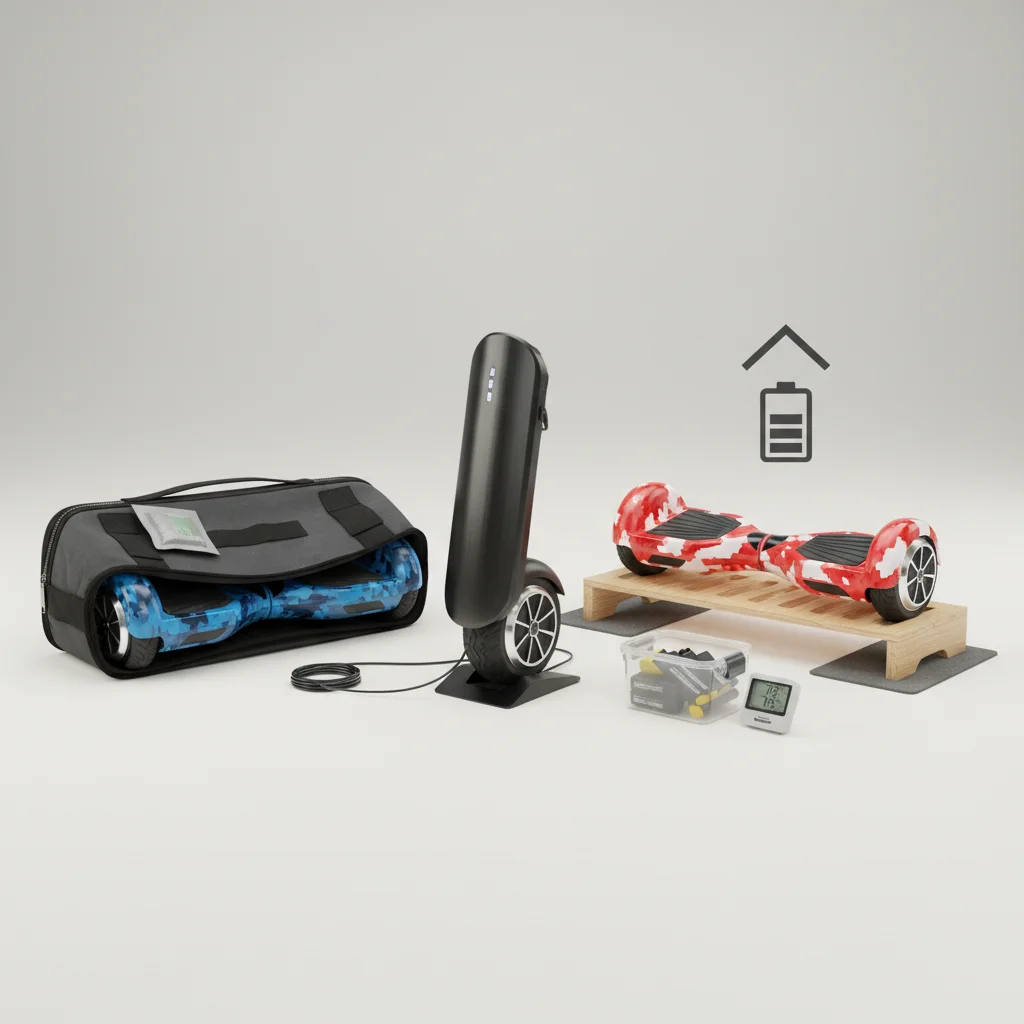
Proper hoverboard storage is crucial for maintaining battery health and overall device longevity. To prevent battery drain and ensure your hoverboard is ready for your next ride, you should store it in a cool, dry place with the battery charged to approximately 50-60%. This specific charge level is ideal for long-term storage, as it minimizes stress on the battery cells.
Why Proper Storage Prevents Battery Drain
Lithium-ion batteries, commonly found in hoverboards, can degrade over time if not stored correctly. Storing a battery fully charged or completely depleted for extended periods can lead to a loss of capacity and a shorter lifespan. A partial charge, around the 50-60% mark, is the sweet spot that reduces internal stress and self-discharge rates, effectively preventing premature battery drain.
Extreme temperatures are also detrimental to hoverboard batteries. Storing your device in very hot or very cold environments can accelerate battery degradation. High temperatures can cause the battery to self-discharge more rapidly, while very low temperatures can temporarily reduce its capacity and potentially damage the internal components.
Optimal Storage Environment for Your Hoverboard
The ideal environment for hoverboard storage is a cool, dry place with a stable temperature. A closet, a dedicated storage room, or even under a bed can be suitable, provided these areas are not subject to significant temperature fluctuations or excessive humidity. Avoid storing your hoverboard in garages or sheds that can become very hot in summer or freezing in winter.
Ensure the storage area is free from direct sunlight, which can also contribute to overheating. Keeping the hoverboard clean and free of dust before storage can also prevent issues with internal components and charging ports when you retrieve it for use.
Regular Checks During Long-Term Storage
|
Our Picks for the Best Hover Board in 2026
As an Amazon Associate I earn from qualifying purchases.
|
||
| Num | Product | Action |
|---|---|---|
| 1 | 8.5” All Terrain Hover Board, Off Road Self Balancing Scooter with Bluetooth and LED Lights, UL2272 Safety Certified |

|
| 2 | Gyroor Self Balancing Scooters Seat Attachment - Go Kart Conversion for 6.5'' to 10'' Self Balancing Scooters, Adjustable Frame Length, Perfect for Kids and Adults |
|
| 3 | Razor Hovertrax 2.0 Hoverboard, UL2272 Certified Self-Balancing Hoverboard Scooter, for Kids Age 8+ |
|
| 4 | INMOTION E20 Electric Unicycle Hoverboard for Beginners – 14" Wheel, 900W Motor, 18.6 Miles Range, 12.5mph, UL2272 Certified – Lightweight & Safe Self-Balancing Scooter |
|
| 5 | Self-Balancing Scooter Skin Hoverboard Sticker Adult e Scooter Electric Scooter for Adults Reflective |
|
| 6 | LIEAGLE Hoverboard, 6.5" Self Balancing Scooter Hover Board with Bluetooth Wheels LED Lights for Kids Adults |
|
| 7 | Self Balance Scooter Seat Attachment 6.5” Two-Wheel Self Balancing Electric Scooter with LED Light Flash Lights Wheels |
|
| 8 | K2 Self-Balancing Scooter Go Kart with Rear Shock Absorption, Balancing Scooter Seat Attachment for 6.5" 8" 10" Tires, Adjustable Length & Off-Road Wheel( (Not Including Balancing Scooter) |
|
| 9 | K1 Go-Kart Seat Attachment for Self-Balancing Scooters, Adjustable Frame Fits 6.5"/8"/10" Boards, Easy Install, Kids & Family Fun (Scooter Not Included)–Classic Black |
|
| 10 | Hover-1 My First Self Balancing Scooter for Kids with 5 mph Max Speed, Dual 150W Motors, 6.3” Tires, 3 Miles Max Range, and LED Headlights |
|
Even with optimal storage conditions, it’s a good practice to periodically check your hoverboard’s battery level if it’s stored for several months. Aim to recharge it back to the 50-60% range every 2-3 months. This helps to counteract any natural self-discharge and keeps the battery cells active, preventing them from falling into a deep discharge state, which can be difficult to recover from.
During these checks, also inspect the hoverboard for any visible damage or signs of wear. This proactive approach ensures that any minor issues can be addressed before they become major problems, guaranteeing your hoverboard remains in top condition.
Disconnecting and Protecting Your Hoverboard
Before storing your hoverboard, it’s advisable to disconnect the charger and ensure the device is powered off completely. Some hoverboards may have a small parasitic drain even when turned off, so disconnecting the charger prevents any accidental charging or power draw. Consider using a protective cover or bag to shield the hoverboard from dust and potential physical damage during storage.
- Charge battery to 50-60% before storage.
- Store in a cool, dry place, away from extreme temperatures.
- Check battery level every 2-3 months and recharge if needed.
- Power off completely and disconnect the charger.
- Use a protective cover to prevent dust and damage.
Recommended Storage Accessories
Investing in a good quality hoverboard carrying bag can significantly improve your storage solution. These bags not only protect your hoverboard from dust and scratches but also make it easier to transport. Look for bags with durable materials and adequate padding.
For those who want to monitor their battery health more closely, a smart charger with a storage mode can be beneficial. These chargers can maintain the battery at an optimal storage voltage, preventing overcharging or deep discharge.
Get our weekly buyer guide
Practical specs, not advice. Unsubscribe anytime.
