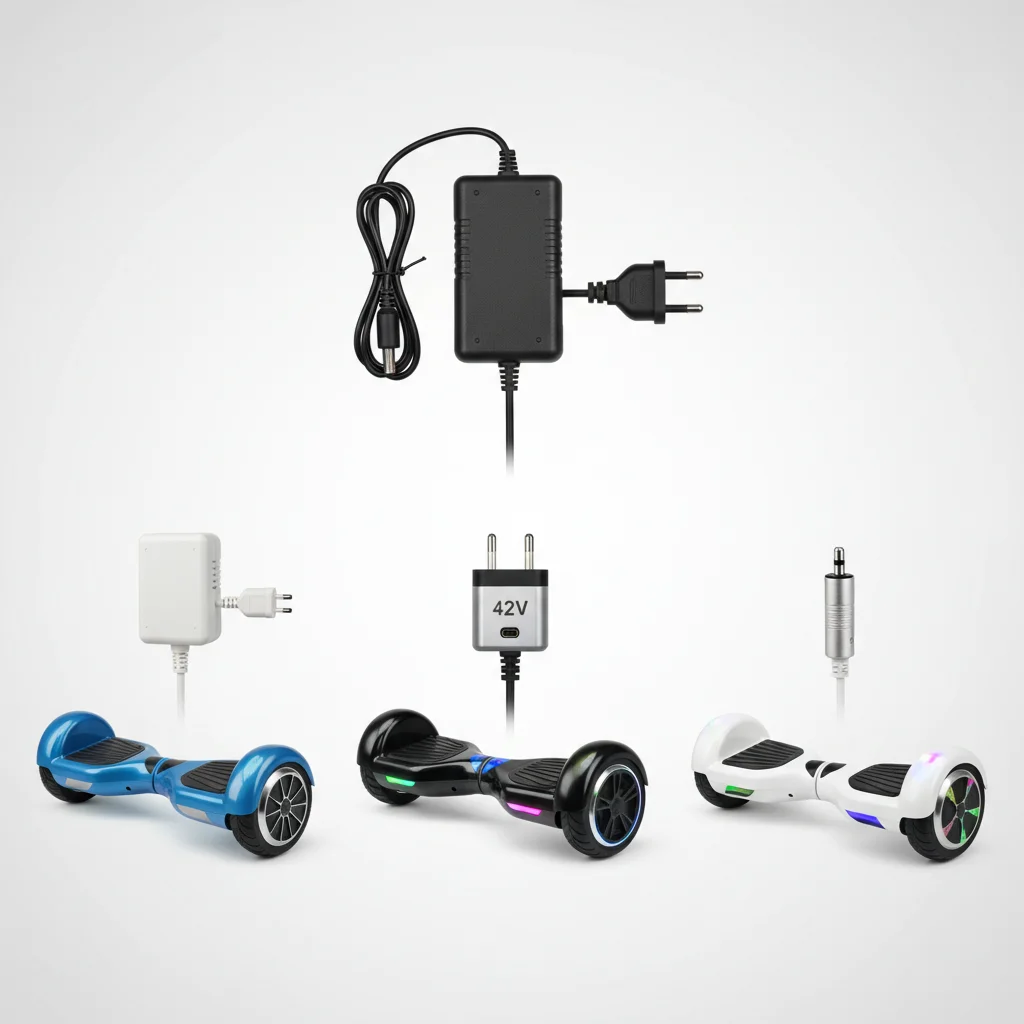
Understanding hoverboard charger compatibility is crucial for the longevity and safety of your device. While it might seem convenient to use any charger that fits, using an incompatible charger can lead to serious issues, including battery damage, reduced lifespan, or even fire hazards. The key factors determining compatibility are voltage (V) and amperage (A), which must precisely match your hoverboard’s battery specifications. Generally, you should always use the charger that came with your hoverboard or a direct replacement specified by the manufacturer.
Why Charger Specifications Matter for Your Hoverboard
Hoverboards operate on specific electrical requirements. The battery inside your hoverboard is designed to receive a particular voltage and current (amperage) during charging. If a charger provides too much voltage, it can overcharge the battery, leading to overheating and potential damage to the internal cells. Conversely, a charger with insufficient voltage will not fully charge the battery, resulting in reduced range and performance. Amperage also plays a critical role; a charger with higher amperage than recommended can charge the battery too quickly, generating excessive heat and shortening its lifespan, while lower amperage will result in significantly longer charging times. For best hoverboard sales roundups on this site.
Identifying Your Hoverboard’s Charging Requirements
To ensure proper charger compatibility, you need to identify the input specifications of your hoverboard’s battery. This information is typically found on a sticker on the hoverboard itself, often near the charging port, or in the owner’s manual. Look for labels like “Input: 42V 2A” or similar. The first number (e.g., 42V) indicates the voltage, and the second number (e.g., 2A) indicates the amperage. Your replacement charger must match these numbers exactly. If you cannot find this information, contacting the hoverboard manufacturer directly with your model number is the safest approach.
Risks of Using an Incompatible Charger
|
Our Picks for the Best Hover Board in 2026
As an Amazon Associate I earn from qualifying purchases.
|
||
| Num | Product | Action |
|---|---|---|
| 1 | Self Balance Scooter Seat Attachment 6.5” Two-Wheel Self Balancing Electric Scooter with LED Light Flash Lights Wheels |

|
| 2 | Gyroor Self Balancing Scooters Seat Attachment - Go Kart Conversion for 6.5'' to 10'' Self Balancing Scooters, Adjustable Frame Length, Perfect for Kids and Adults |
|
| 3 | K1 Go-Kart Seat Attachment for Self-Balancing Scooters, Adjustable Frame Fits 6.5"/8"/10" Boards, Easy Install, Kids & Family Fun (Scooter Not Included)–Classic Black |
|
| 4 | K2 Self-Balancing Scooter Go Kart with Rear Shock Absorption, Balancing Scooter Seat Attachment for 6.5" 8" 10" Tires, Adjustable Length & Off-Road Wheel( (Not Including Balancing Scooter) |
|
| 5 | Hover-1 My First Self Balancing Scooter for Kids with 5 mph Max Speed, Dual 150W Motors, 6.3” Tires, 3 Miles Max Range, and LED Headlights |
|
| 6 | LIEAGLE Hoverboard, 6.5" Self Balancing Scooter Hover Board with Bluetooth Wheels LED Lights for Kids Adults |
|
| 7 | Self-Balancing Scooter Skin Hoverboard Sticker Adult e Scooter Electric Scooter for Adults Reflective |
|
| 8 | 8.5” All Terrain Hover Board, Off Road Self Balancing Scooter with Bluetooth and LED Lights, UL2272 Safety Certified |
|
| 9 | INMOTION E20 Electric Unicycle Hoverboard for Beginners – 14" Wheel, 900W Motor, 18.6 Miles Range, 12.5mph, UL2272 Certified – Lightweight & Safe Self-Balancing Scooter |
|
| 10 | Razor Hovertrax 2.0 Hoverboard, UL2272 Certified Self-Balancing Hoverboard Scooter, for Kids Age 8+ |
|
Using a charger that doesn’t match your hoverboard’s specifications carries significant risks. Overcharging due to incorrect voltage can cause the battery to swell, leak, or even ignite. Undercharging, while less dangerous, will degrade battery performance over time and reduce the overall lifespan of your hoverboard. Incorrect amperage can also lead to overheating during the charging process, which is a common cause of battery failure. Always prioritize safety and use a charger that is explicitly designed for your specific hoverboard model.
- Battery Overheating: Incorrect voltage or amperage can cause the battery to generate excessive heat.
- Reduced Battery Lifespan: Incompatible charging can accelerate battery degradation.
- Fire Hazard: Severe overcharging can lead to thermal runaway and fire.
- Voided Warranty: Using non-approved chargers often voids the manufacturer’s warranty.
- Inefficient Charging: Mismatched chargers may not fully charge the battery or take excessively long.
Where to Find Compatible Hoverboard Chargers
The best place to find a compatible hoverboard charger is through the original manufacturer’s website or an authorized dealer. Many reputable hoverboard brands offer replacement chargers specifically designed for their models. If the original charger is unavailable, look for third-party chargers that explicitly state compatibility with your hoverboard’s make and model, and verify that the voltage and amperage output match your hoverboard’s requirements precisely. Always purchase from trusted retailers to avoid counterfeit or low-quality chargers that could pose a risk.
For a reliable replacement charger that matches various hoverboard models, consider checking out. They offer a range of certified chargers with clear specifications to help you find the right fit for your device. Always double-check the voltage and amperage before making a purchase.
Tips for Safe Hoverboard Charging Practices
Beyond compatibility, practicing safe charging habits is essential. Always charge your hoverboard on a non-flammable surface, away from carpets or other combustible materials. Never leave a charging hoverboard unattended for extended periods, especially overnight. Disconnect the charger once the battery is full to prevent overcharging, even if your charger has an auto-shutoff feature. If you notice any unusual smells, excessive heat, or swelling from the battery during charging, immediately unplug the charger and move the hoverboard to a safe, open area, then contact the manufacturer or a professional for assistance. Proper charging practices extend the life of your hoverboard and ensure your safety.
If you’re in need of a universal charger that adapts to multiple hoverboard brands, ensure it has safety certifications and allows for manual voltage/amperage selection, or clearly states its compatibility. You can find a selection of highly-rated, safety-certified chargers at, which are designed to meet various hoverboard specifications.
Get our weekly buyer guide
Practical specs, not advice. Unsubscribe anytime.

I’ve always wondered about charger compatibility, especially with all the different brands out there. It’s reassuring to hear that sticking with the manufacturer’s specified charger is the safest bet. I had a scare once where my board felt really hot after charging with a generic one, so this info about overheating makes a lot of sense.
So glad I read this before I messed up my new hoverboard! I was about to grab a charger from my friend, but now I understand why the battery specifications are so critical. It really clarified why using an incompatible charger can reduce the lifespan of the device. Thanks for the clear explanation!
Good info on why you shouldn’t mix and match chargers. I appreciate the warning about fire hazards, that’s serious. My only minor complaint is that it didn’t really suggest where to find reliable direct replacements if you’ve lost your original. Still, it’s a solid reminder to check those V and A specs.
This guide was super helpful! I almost used an old charger from a different hoverboard because it fit, but after reading about the voltage and amperage needing to match exactly, I decided against it. It’s good to know why using the wrong one can cause battery damage. Definitely worth taking the time to find the right replacement.