To safely store a lithium hoverboard for winter, maintain its battery charge between 40% and 60%, and keep it in a cool, dry indoor environment with stable temperatures between 10°C and 25°C (50°F and 77°F). This practice prevents battery degradation, extends the hoverboard’s lifespan, and ensures it’s ready for use when warmer weather returns.
Understanding Lithium-Ion Batteries and Winter’s Impact
Lithium-ion (Li-ion) batteries power modern hoverboards, offering high energy density and a lightweight design. However, these sophisticated power sources are sensitive to extreme temperatures, especially cold. Prolonged exposure to freezing conditions can cause lithium plating on the anode, leading to irreversible damage, reduced capacity, and a diminished overall lifespan. Beyond the battery, cold can also make plastic and rubber components brittle, increasing the risk of cracks and breakage. Proper storage is crucial for protecting your hoverboard from the harsh effects of winter.
Essential Pre-Storage Preparation
Before your hoverboard settles in for its long winter nap, a thorough preparation routine is vital. This initial care ensures the device is clean, safe, and optimally conditioned for extended periods of inactivity, preventing potential issues down the line. Taking these simple steps can make a significant difference in how your hoverboard performs next season.
Cleaning Your Hoverboard
Start by giving your hoverboard a comprehensive clean. Remove any dirt, dust, mud, or debris from the casing, wheels, and footpads using a damp cloth. Pay close attention to areas where dirt might accumulate, as moisture and grime can lead to corrosion over time. Ensure the hoverboard is completely dry before proceeding with storage to prevent any moisture-related damage to electronic components or the battery.
Battery Check and Initial Charge
The charge level of your lithium-ion battery is critical for winter storage. The consensus among experts is to store the battery at a charge level between 40% and 60%. Never store a hoverboard with a fully charged (100%) or completely depleted (0%) battery, as both extremes can stress the battery cells and significantly shorten their lifespan. A partial charge minimizes self-discharge and preserves the battery’s overall health.
Physical Inspection
Before storage, take a moment to inspect your hoverboard for any existing damage. Check the tires for proper inflation – if they’re pneumatic, ensure they’re at the recommended pressure. Look for cracks in the casing, loose connections, or any other signs of wear and tear. Addressing these issues now can prevent them from worsening during storage and ensure your hoverboard is safe for use in the spring.
Power Down
|
Our Picks for the Best Hover Board in 2026
As an Amazon Associate I earn from qualifying purchases.
|
||
| Num | Product | Action |
|---|---|---|
| 1 | Hover-1 My First Self Balancing Scooter for Kids with 5 mph Max Speed, Dual 150W Motors, 6.3” Tires, 3 Miles Max Range, and LED Headlights |

|
| 2 | Self-Balancing Scooter Skin Hoverboard Sticker Adult e Scooter Electric Scooter for Adults Reflective |
|
| 3 | 8.5” All Terrain Hover Board, Off Road Self Balancing Scooter with Bluetooth and LED Lights, UL2272 Safety Certified |
|
| 4 | LIEAGLE Hoverboard, 6.5" Self Balancing Scooter Hover Board with Bluetooth Wheels LED Lights for Kids Adults |
|
| 5 | INMOTION E20 Electric Unicycle Hoverboard for Beginners – 14" Wheel, 900W Motor, 18.6 Miles Range, 12.5mph, UL2272 Certified – Lightweight & Safe Self-Balancing Scooter |
|
| 6 | Gyroor Self Balancing Scooters Seat Attachment - Go Kart Conversion for 6.5'' to 10'' Self Balancing Scooters, Adjustable Frame Length, Perfect for Kids and Adults |
|
| 7 | Self Balance Scooter Seat Attachment 6.5” Two-Wheel Self Balancing Electric Scooter with LED Light Flash Lights Wheels |
|
| 8 | Razor Hovertrax 2.0 Hoverboard, UL2272 Certified Self-Balancing Hoverboard Scooter, for Kids Age 8+ |
|
| 9 | K2 Self-Balancing Scooter Go Kart with Rear Shock Absorption, Balancing Scooter Seat Attachment for 6.5" 8" 10" Tires, Adjustable Length & Off-Road Wheel( (Not Including Balancing Scooter) |
|
| 10 | K1 Go-Kart Seat Attachment for Self-Balancing Scooters, Adjustable Frame Fits 6.5"/8"/10" Boards, Easy Install, Kids & Family Fun (Scooter Not Included)–Classic Black |
|
Always ensure the hoverboard’s main power switch is in the “OFF” position. This prevents any unnecessary power drain from internal components that might slowly deplete the battery during storage, reducing the risk of a harmful deep discharge. Some models may have specific “storage modes” that optimize battery conditions; consult your user manual if applicable.
Optimal Battery Storage Practices for Longevity
The way you store your hoverboard’s battery is paramount to its long-term health. Lithium-ion batteries thrive in stable, moderate conditions. Adhering to specific guidelines regarding charge level, temperature, and environmental factors will ensure your hoverboard’s battery retains its performance and extends its operational life for many seasons to come.
The 40-60% Rule
Maintaining a charge level between 40% and 60% is the golden rule for storing lithium-ion batteries. This range minimizes the stress on the battery cells, reducing the rate of degradation and self-discharge. Storing at 100% can cause accelerated aging, while 0% can lead to deep discharge, potentially rendering the battery unusable or significantly reducing its capacity.
Ideal Temperature and Humidity
Store your hoverboard in a cool, dry place with stable temperatures, ideally between 10°C and 25°C (50°F and 77°F). Avoid locations with extreme heat or cold, as well as areas prone to significant temperature fluctuations, such as unheated garages or sheds. High humidity can also be detrimental, leading to corrosion of electronic components. A controlled indoor environment, like a closet or a heated basement, is usually ideal.
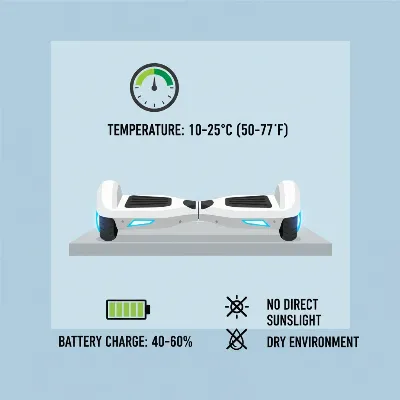 An infographic showing ideal conditions for hoverboard winter storage, including temperature and charge level
Periodic Checks and Recharging
Even perfectly stored batteries will slowly self-discharge. To prevent the charge level from dropping too low, check your hoverboard’s battery every two to three months. If the charge falls below 30-40%, give it a brief recharge to bring it back into the 40-60% range. This intermittent maintenance is key to preventing deep discharge and maintaining battery health over extended storage periods.
Avoiding Extremes
Beyond temperature, protect your hoverboard from other environmental extremes. Never store it in direct sunlight, which can cause overheating, nor near heat sources like radiators or fireplaces, which can create condensation. Avoid placing heavy objects on the hoverboard, as physical stress can damage its internal components and battery pack.
Choosing the Right Storage Location
Selecting the proper storage location is almost as important as the preparation itself. The environment where your hoverboard spends its off-season directly impacts its condition and the longevity of its battery. Opting for a secure, controlled space will ensure your hoverboard remains in prime condition, ready for action when the weather warms.
Indoor is Key
Always store your hoverboard indoors. This protects it from the elements, including rain, snow, and fluctuating outdoor temperatures. An indoor location provides a more stable environment that is conducive to maintaining battery health and preventing material degradation.
Safe Environment
Your storage location should be dry, well-ventilated, and free from flammable materials. In the unlikely event of a battery issue, proper ventilation can help mitigate risks. Store the hoverboard on a non-flammable surface, away from anything that could catch fire. Avoid damp basements or dusty attics, as these environments can negatively affect electronics.
Accessibility and Security
While stored, your hoverboard should be in a location that allows for easy periodic checks of the battery charge. It should also be secure, protecting it from accidental bumps, drops, or unauthorized access. If possible, consider using a protective case to add an extra layer of insulation and physical protection.
Common Mistakes to Avoid During Winter Storage
Even with the best intentions, some hoverboard owners make common errors that can compromise their device’s health during winter storage. Being aware of these pitfalls can save you from potential damage, costly repairs, and disappointment when you’re ready to ride again. Avoiding these mistakes is a simple way to ensure your hoverboard remains reliable.
- Storing fully charged or fully depleted: As mentioned, these extremes are highly detrimental to lithium-ion battery health.
- Ignoring the hoverboard for months: Without periodic checks and top-ups, batteries can deep discharge beyond recovery.
- Charging a cold battery: Attempting to charge a battery that has been exposed to freezing temperatures can cause serious internal damage. Always allow it to warm to room temperature first.
- Leaving it in an unheated shed or vehicle: These locations experience drastic temperature swings that are harmful to both the battery and other components.
- Exposing to direct heat or moisture: Direct heat degrades batteries quickly, while moisture leads to corrosion and short circuits.
Reviving Your Hoverboard for Spring
When the days grow longer and the ice thaws, you’ll be eager to hit the pavement again. Bringing your hoverboard out of winter storage requires a few careful steps to ensure it’s safe and fully functional. A proper reactivation process will prevent any unexpected issues and get you rolling smoothly.
Gradual Warming
If your hoverboard has been stored in a cool environment, allow it to gradually warm up to room temperature for at least 2-3 hours before attempting to charge or use it. This prevents thermal shock and allows the battery cells to stabilize.
Thorough Inspection
Before plugging in or riding, conduct a thorough inspection. Check all components, including the wheels, casing, and footpads, for any visible damage that might have occurred during storage. Ensure all connections are secure.
First Charge
Once it’s at room temperature and inspected, charge your hoverboard fully using its original charger. Always charge in a well-ventilated area and avoid leaving it unattended for extended periods, especially overnight.
Test Ride
Before embarking on a full ride, perform a cautious test. Slowly engage the hoverboard in a safe, open area to ensure all functions, including balancing, steering, and braking, are working correctly. Listen for any unusual sounds and observe its overall performance.
Buying Guide Considerations for Longevity and Storage
When investing in a new hoverboard, thinking about its long-term care, including winter storage, can influence your decision. Certain features contribute to a hoverboard’s resilience and ease of maintenance, making them better choices for owners who plan to store their devices seasonally.
Battery Management Systems (BMS)
A robust Battery Management System is crucial. A good BMS protects the battery from overcharging, over-discharging, overheating, and short circuits. It helps manage cell balancing, which is vital for battery longevity, especially during periods of inactivity. Look for models that explicitly mention advanced BMS features.
Durability and Build Quality
High-quality materials and solid construction can withstand environmental stresses better. A hoverboard with a durable casing and robust internal components is less likely to suffer from incidental damage during handling or minor temperature fluctuations during storage.
Water Resistance Ratings
While not directly for winter storage, a higher IP (Ingress Protection) rating indicates better resistance to dust and water. This can be beneficial as it means the internal components are better protected from residual moisture during cleaning or humidity in the storage environment, extending the overall lifespan of the device.
Safety First: Preventing Hazards
Safety should always be the top priority when dealing with lithium-ion batteries. While rare, improper handling or storage can lead to overheating, swelling, or even fire. Understanding and implementing safety measures during winter storage is crucial for protecting your property and loved ones.
> “Always prioritize safety by storing your hoverboard’s lithium battery at the correct charge and temperature. Preventing thermal runaway is key to ensuring it lasts and remains safe.” – Dr. Elena Petrova, Lithium-Ion Battery Specialist
Fire Risk Awareness
Never store your hoverboard near flammable materials. Charge it only on a non-flammable surface, away from carpets or wood, and never leave it charging overnight or unattended. If you notice any swelling, excessive heat, or unusual odors from the battery, disconnect it immediately and move it to a safe, outdoor location away from anything combustible.
Ventilation
Ensure your storage area is well-ventilated, especially if charging the hoverboard periodically. Good airflow helps dissipate any minor heat generated by the battery and prevents the buildup of potential gases, although this is more critical during active use and charging.
Terminal Protection
For added safety, particularly if the battery pack is removable, consider covering the exposed terminals with electrical tape or a non-conductive cap. This prevents accidental short circuits if the terminals come into contact with other metal objects during storage.
Conclusion
Properly storing your lithium-ion hoverboard for winter is an investment in its longevity, performance, and your safety. By diligently cleaning your device, maintaining an optimal 40-60% battery charge, and choosing a cool, dry, stable indoor storage environment, you can significantly extend its lifespan. Remember to conduct periodic checks and always prioritize safety precautions. When spring arrives, a well-cared-for hoverboard will be ready to power your adventures with the same enthusiasm as a brand-new ride.
Frequently Asked Questions
What is the best temperature to store a hoverboard battery in winter?
The ideal temperature range for storing a hoverboard's lithium-ion battery is between 10u00b0C and 25u00b0C (50u00b0F and 77u00b0F). Stable, moderate room temperature conditions help preserve battery health and prevent degradation caused by extreme cold or heat fluctuations.
Should I fully charge my hoverboard before storing it for winter?
No, it is not recommended to fully charge your hoverboard before storing it for winter. The optimal charge level for long-term storage of lithium-ion batteries is between 40% and 60%. Storing at 100% can accelerate battery aging and reduce its overall lifespan.
How often should I check my hoverboard battery during winter storage?
You should check your hoverboard's battery charge level approximately every two to three months during winter storage. If the charge drops below 30-40%, give it a brief top-up to bring it back into the recommended 40-60% range to prevent deep discharge.
Can I store my hoverboard in an unheated garage during winter?
Storing your hoverboard in an unheated garage during winter is not recommended. Unheated garages often experience significant temperature fluctuations and can drop below freezing, which is detrimental to lithium-ion batteries and can damage other components like plastic and rubber.
Is it safe to charge a hoverboard battery that has been stored in the cold?
No, it is not safe to charge a hoverboard battery that has been stored in cold or freezing temperatures. You must allow the hoverboard and its battery to warm up naturally to room temperature (at least 15-20u00b0C or 59-68u00b0F) for several hours before attempting to charge it. This prevents internal damage to the battery cells.
How do I prepare my hoverboard for use after winter storage?
After winter storage, allow your hoverboard to reach room temperature for 2-3 hours, then conduct a thorough physical inspection for any damage. Once inspected, charge the battery fully using its original charger. Before riding extensively, perform a cautious test run in a safe area to ensure all functions are working properly.
How to Store a Hoverboard for Winter
Properly storing your lithium-ion hoverboard for winter ensures battery longevity and safe operation when spring arrives. Follow these steps for optimal care.
Thoroughly clean the hoverboard, removing all dirt and debris from the casing, wheels, and footpads. Ensure it is completely dry. Inspect for any physical damage, loose connections, or tire inflation issues before storage.
Check the battery charge level and adjust it to be between 40% and 60%. Avoid storing the battery fully charged (100%) or completely depleted (0%), as both extremes can stress the cells and shorten their lifespan. Power down the hoverboard completely.
Store your hoverboard indoors in a cool, dry place with stable temperatures between 10u00b0C and 25u00b0C (50u00b0F and 77u00b0F). Avoid unheated garages, sheds, or areas with direct sunlight, extreme heat, or high humidity. Ensure the location is well-ventilated and free from flammable materials.
Every two to three months during storage, check the hoverboard's battery charge level. If it falls below 30-40%, give it a brief recharge to bring it back into the 40-60% range. This prevents deep discharge and maintains battery health.
When ready to use, allow the hoverboard to warm to room temperature for at least 2-3 hours. Conduct a final inspection for damage, then fully charge the battery. Perform a cautious test ride in a safe area to ensure all functions are working correctly before full use.
Get our weekly buyer guide
Practical specs, not advice. Unsubscribe anytime.

This was so helpful! I had no idea that cold could make the plastic and rubber components brittle. I’ve always focused on the battery, but now I’m extra careful about where I store my hoverboard. It’s great to know how to protect the whole thing, not just the power source.
Good advice here. I used to worry about leaving my hoverboard in the cold, especially after reading about lithium plating. Keeping it in a stable indoor environment around 50-77°F really makes sense. My only minor complaint is that I wish I’d known this sooner, but better late than never for battery longevity!
I always just threw my hoverboard in the garage for winter and wondered why the battery died so fast. The tip about keeping the charge between 40-60% is a game-changer! My board started right up this spring with no issues, and it feels like it holds a charge way longer now. Definitely following these steps every year.
The advice about avoiding freezing conditions is super important, I’ve seen friends’ hoverboards totally die because of that. I tried to keep mine in the house this winter, but finding a spot with stable temperatures between 10°C and 25°C was a bit tricky in my small apartment. It’s a good goal, just hard to execute perfectly sometimes.