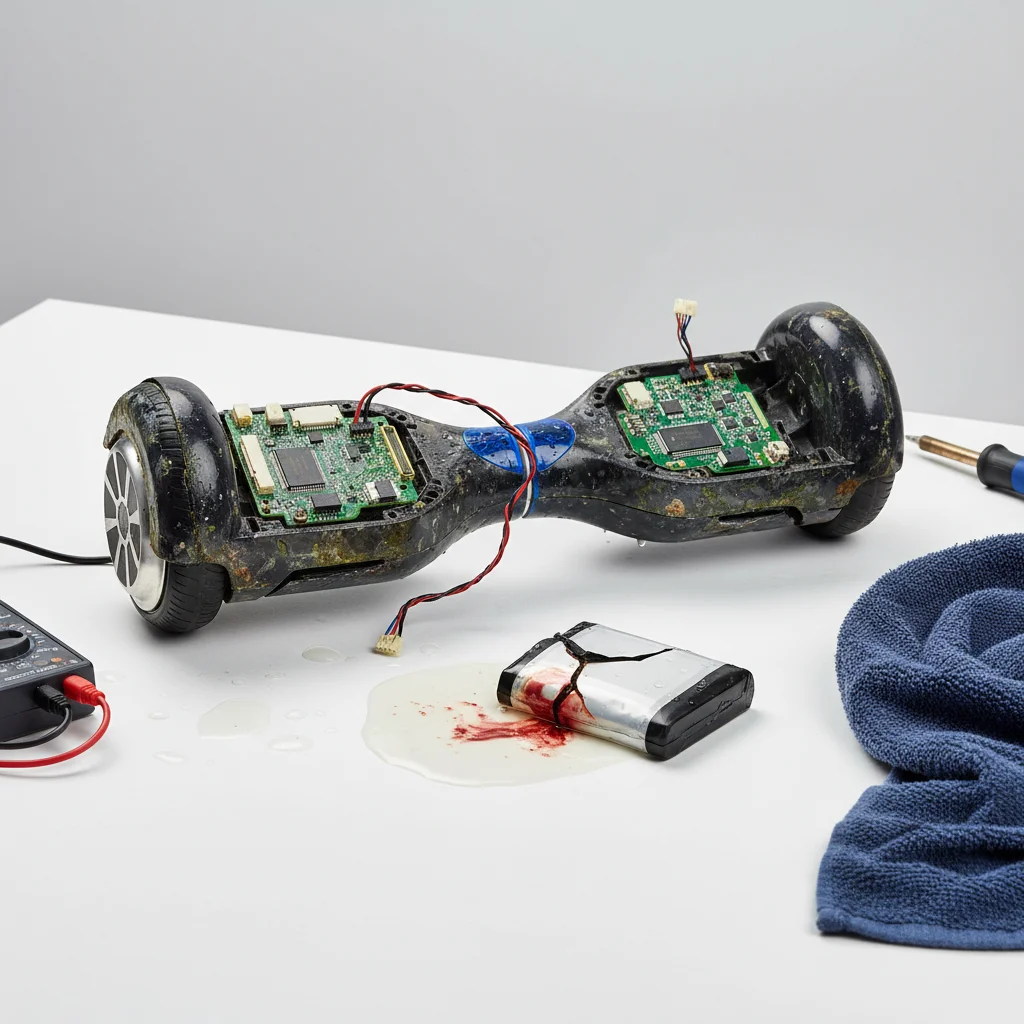
Hoverboards and water are generally not a good combination, and unfortunately, hoverboard water damage can often be fixed, but the success rate depends heavily on the extent of the exposure and how quickly you act. Minor splashes might be recoverable with immediate drying, while submersion often leads to irreparable damage to sensitive electronic components like the battery, motherboard, and sensors.
Immediate Steps After Water Exposure
If your hoverboard gets wet, the very first thing you must do is turn it off immediately and disconnect the charger if it’s plugged in. Do not attempt to turn it back on or charge it, as this can short-circuit the internal electronics. The next crucial step is to remove the battery. Most hoverboards have a battery compartment that can be accessed by unscrewing the bottom panel. Carefully disconnect the battery pack to prevent further electrical damage. For explore our hoverboard sales reviews on this site.
Drying Your Hoverboard Thoroughly
After disconnecting the battery, it’s essential to dry the hoverboard as thoroughly as possible. Use a clean, dry cloth to wipe down all accessible surfaces. For internal components, you can use a hairdryer on a cool setting, keeping it at a safe distance to avoid overheating. Alternatively, place the hoverboard in a well-ventilated area for several days, ideally with a desiccant like silica gel packets or uncooked rice placed inside the open compartments. This process can take anywhere from 48 hours to a full week to ensure all moisture has evaporated.
- Turn off and unplug immediately.
- Remove the battery pack carefully.
- Wipe down all external surfaces.
- Use a hairdryer on cool or place in a dry, ventilated area.
- Consider desiccant packets for internal moisture.
Inspecting for Corrosion and Damage
|
Our Picks for the Best Hover Board in 2026
As an Amazon Associate I earn from qualifying purchases.
|
||
| Num | Product | Action |
|---|---|---|
| 1 | Gyroor Self Balancing Scooters Seat Attachment - Go Kart Conversion for 6.5'' to 10'' Self Balancing Scooters, Adjustable Frame Length, Perfect for Kids and Adults |

|
| 2 | 8.5” All Terrain Hover Board, Off Road Self Balancing Scooter with Bluetooth and LED Lights, UL2272 Safety Certified |
|
| 3 | INMOTION E20 Electric Unicycle Hoverboard for Beginners – 14" Wheel, 900W Motor, 18.6 Miles Range, 12.5mph, UL2272 Certified – Lightweight & Safe Self-Balancing Scooter |
|
| 4 | K1 Go-Kart Seat Attachment for Self-Balancing Scooters, Adjustable Frame Fits 6.5"/8"/10" Boards, Easy Install, Kids & Family Fun (Scooter Not Included)–Classic Black |
|
| 5 | LIEAGLE Hoverboard, 6.5" Self Balancing Scooter Hover Board with Bluetooth Wheels LED Lights for Kids Adults |
|
| 6 | Razor Hovertrax 2.0 Hoverboard, UL2272 Certified Self-Balancing Hoverboard Scooter, for Kids Age 8+ |
|
| 7 | Self-Balancing Scooter Skin Hoverboard Sticker Adult e Scooter Electric Scooter for Adults Reflective |
|
| 8 | K2 Self-Balancing Scooter Go Kart with Rear Shock Absorption, Balancing Scooter Seat Attachment for 6.5" 8" 10" Tires, Adjustable Length & Off-Road Wheel( (Not Including Balancing Scooter) |
|
| 9 | Hover-1 My First Self Balancing Scooter for Kids with 5 mph Max Speed, Dual 150W Motors, 6.3” Tires, 3 Miles Max Range, and LED Headlights |
|
| 10 | Self Balance Scooter Seat Attachment 6.5” Two-Wheel Self Balancing Electric Scooter with LED Light Flash Lights Wheels |
|
Once the hoverboard is completely dry, you’ll need to inspect the internal components for any signs of corrosion. Look for white, green, or blue powdery residue on circuit boards, connectors, and battery terminals. Even if the hoverboard appears dry, corrosion can develop over time and cause intermittent issues or complete failure. If you find corrosion, you can try to gently clean it with a soft brush and isopropyl alcohol (90% or higher), which evaporates quickly and leaves no residue.
Testing and Professional Repair Options
After drying and cleaning, carefully reassemble the hoverboard and reconnect the battery. Attempt to turn it on. If it powers up and functions normally, you might have successfully mitigated the damage. However, if it shows signs of malfunction, such as erratic behavior, beeping, or failure to turn on, it’s likely that some components are permanently damaged. At this point, consider taking it to a professional hoverboard repair shop. They have specialized tools and expertise to diagnose and replace damaged parts like the motherboard, gyroscopes, or battery management system.
Preventing Future Water Damage
The best way to deal with hoverboard water damage is to prevent it from happening in the first place. Always avoid riding your hoverboard in the rain, through puddles, or on wet surfaces. Store your hoverboard in a dry environment and keep it away from areas where it could accidentally get wet. Some hoverboards offer a degree of water resistance, often indicated by an IP (Ingress Protection) rating, but even these are not fully waterproof and should not be submerged.
Get our weekly buyer guide
Practical specs, not advice. Unsubscribe anytime.
