Riding a hoverboard in the rain is generally not recommended, as most models are designed for dry conditions and are only water-resistant, not waterproof. While some hoverboards with an IPX4 or IP54 rating can withstand light splashes or drizzles, they are not built for heavy rain, deep puddles, or submersion, which can lead to electrical damage, short circuits, or battery fires. Prioritizing safety and understanding your hoverboard’s specific water resistance level is crucial for both rider safety and device longevity.
Types of Hoverboards and Water Resistance
Hoverboards available today range from compact models designed for smooth pavements to robust all-terrain versions built for more challenging environments. The crucial distinction when it comes to wet weather is their level of water resistance versus waterproofing. It’s vital to understand that very few hoverboards are truly waterproof, meaning they cannot be fully submerged in water without damage. Most, however, offer a degree of water resistance, which allows them to handle splashes or light rain without immediate failure.
All-terrain hoverboards, often featuring larger, inflatable tires, tend to have better water resistance compared to standard models. Their design is inherently more robust, aiming to protect internal components from external elements like dirt, dust, and moisture commonly encountered off-road. However, even these models have limits and are not designed for heavy downpours or deep puddles.
Understanding IP Ratings: Your Guide to Water Protection
To ascertain a hoverboard’s water resistance, you should consult its Ingress Protection (IP) rating. This international standard indicates the degree of protection an electronic device has against solids (like dust) and liquids (like water). The IP rating consists of two digits: the first denotes protection against solids, and the second signifies protection against liquids.
For hoverboards, you will commonly find ratings such as IPX4 or IP54. An IPX4 rating means the hoverboard is protected against splashing water from any direction. An IP54 rating indicates partial dust protection (some dust may enter but won’t interfere with operation) and protection against splashing water from any direction. While these ratings confirm a device can endure light moisture, they do not guarantee protection against heavy rain or submersion. Higher ratings like IPX6 (protection against powerful water jets) or IPX7 (protection against temporary submersion up to 1 meter for 30 minutes) are rare in hoverboards and significantly increase the cost. Always prioritize hoverboards with a clearly stated IP rating, but remember that even with a decent rating, exercising caution in wet conditions is paramount.
> “Understanding your hoverboard’s IP rating is like knowing its weather forecast. It tells you what it can handle, but common sense dictates staying out of a storm.” – Dr. Elena Petrova, Robotics and Personal Mobility Expert
Key Specifications for Safe Rain Riding
When considering a hoverboard for potential wet weather use, beyond the IP rating, several specifications are crucial for enhanced safety and durability. Primarily, sealed components are vital. Look for models where critical electronic parts, particularly the battery and control boards, are encased and protected with rubberized seals to prevent water ingress. This internal sealing is more important than external aesthetics.
The tire design also plays a significant role. All-terrain hoverboards often feature pneumatic (air-filled) or solid rubber tires with deeper treads, which provide better traction on wet or uneven surfaces compared to the smoother, smaller wheels found on standard models. Airless tires can also reduce the risk of water seeping into internal mechanisms through tire components. Finally, a hoverboard with a higher ground clearance can offer a slight advantage, reducing the likelihood of water splashing directly into the undercarriage from puddles.
Hoverboard Safety in Wet Conditions
Riding a hoverboard in the rain presents several inherent risks, even for water-resistant models. Water significantly reduces traction, making surfaces incredibly slippery and increasing the risk of losing control, skidding, and falling. Electrical components are highly vulnerable to moisture, which can lead to short circuits, corrosion, or even complete system failure. In severe cases, water damage to lithium-ion batteries can cause overheating or even fires.
If you find yourself caught in an unexpected light drizzle, prioritize safety. Reduce your speed significantly to maintain better control on slippery surfaces. Avoid sudden or sharp turns, as these can easily cause the hoverboard to lose traction. Wear non-slip shoes to ensure a firm grip on the footpads. Crucially, never ride through deep puddles, wet grass, mud, or wet sand, as these can submerge sensitive components or cause unpredictable handling. It is always best to find shelter and wait for surfaces to dry rather than risk serious damage or injury.
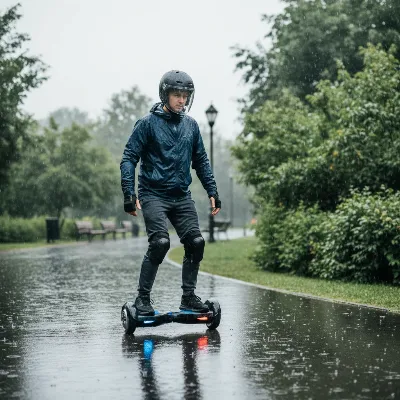 Person riding hoverboard carefully in light rain, wearing protective gear, on a smooth, slightly wet pavement with caution.
Top Considerations for Water-Resistant Hoverboards
When looking for a hoverboard with enhanced water resistance, focus on models that explicitly state their IP ratings and feature robust construction. While specific models from 2026 are not yet available, trends suggest a continued emphasis on durability and rider safety. Brands known for their all-terrain or more rugged designs, such as Swagtron (like the Outlaw T6) and Gyroor (like the Warrior), have historically offered models with IP ratings like IPX4 or IP54. These hoverboards typically incorporate larger, more resilient tires and more secure casings.
For instance, models similar to the Epikgo Sport have been noted for larger tires (8.5 inches) and an IP56 rating, indicating strong protection against dust and water jets. When comparing potential purchases, investigate manufacturer specifications for details on sealed battery compartments and water-resistant circuit board coatings. Remember that “water-resistant” is not a blanket guarantee; it signifies a higher tolerance for incidental exposure, not immunity to prolonged or heavy water contact.
Maintaining Your Hoverboard After Rain Exposure
If your hoverboard does get wet, acting quickly is paramount to prevent permanent damage. First and foremost, power it off immediately if it’s still running, and unplug it if it was charging. This prevents short circuits from occurring. If your hoverboard has a removable battery, carefully disconnect it, as the lithium-ion battery is highly sensitive to water.
Next, use a dry cloth or towel to thoroughly wipe down all exterior surfaces, paying close attention to seams, ports, and buttons where water might collect. Avoid shaking or tilting the hoverboard, which could spread water internally. If you are comfortable, you can carefully open the casing to expose internal components and gently dab away any visible moisture with an absorbent cloth. After cleaning, place the hoverboard (or its disassembled parts) in a dry area. You can utilize silica gel packets or even uncooked rice (placed around, not directly on, components) to absorb residual moisture. Allow it to air-dry completely for at least 24-48 hours, or even 48-72 hours if disassembled, before attempting to power it on again. Avoid using direct heat sources like hair dryers, as this can cause further damage. If issues persist after thorough drying, consult a professional repair technician.
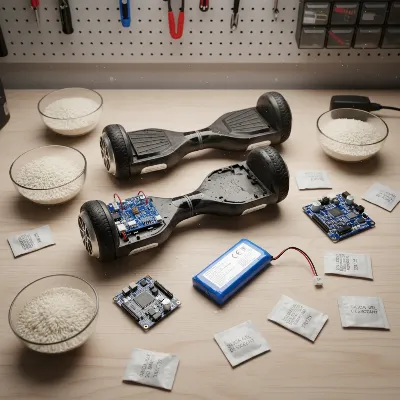 Hoverboard components drying on a table after being exposed to rain, with rice and silica gel packets.
Choosing a Water-Resistant Hoverboard: A Buyer’s Guide
Selecting a hoverboard that can handle some moisture involves more than just picking a color. Your choice should align with your expected use, budget, and safety priorities.
Budget
|
Our Picks for the Best Hover Board in 2026
As an Amazon Associate I earn from qualifying purchases.
|
||
| Num | Product | Action |
|---|---|---|
| 1 | LIEAGLE Hoverboard, 6.5" Self Balancing Scooter Hover Board with Bluetooth Wheels LED Lights for Kids Adults |

|
| 2 | Self-Balancing Scooter Skin Hoverboard Sticker Adult e Scooter Electric Scooter for Adults Reflective |
|
| 3 | INMOTION E20 Electric Unicycle Hoverboard for Beginners – 14" Wheel, 900W Motor, 18.6 Miles Range, 12.5mph, UL2272 Certified – Lightweight & Safe Self-Balancing Scooter |
|
| 4 | Gyroor Self Balancing Scooters Seat Attachment - Go Kart Conversion for 6.5'' to 10'' Self Balancing Scooters, Adjustable Frame Length, Perfect for Kids and Adults |
|
| 5 | K1 Go-Kart Seat Attachment for Self-Balancing Scooters, Adjustable Frame Fits 6.5"/8"/10" Boards, Easy Install, Kids & Family Fun (Scooter Not Included)–Classic Black |
|
| 6 | Hover-1 My First Self Balancing Scooter for Kids with 5 mph Max Speed, Dual 150W Motors, 6.3” Tires, 3 Miles Max Range, and LED Headlights |
|
| 7 | Razor Hovertrax 2.0 Hoverboard, UL2272 Certified Self-Balancing Hoverboard Scooter, for Kids Age 8+ |
|
| 8 | K2 Self-Balancing Scooter Go Kart with Rear Shock Absorption, Balancing Scooter Seat Attachment for 6.5" 8" 10" Tires, Adjustable Length & Off-Road Wheel( (Not Including Balancing Scooter) |
|
| 9 | Self Balance Scooter Seat Attachment 6.5” Two-Wheel Self Balancing Electric Scooter with LED Light Flash Lights Wheels |
|
| 10 | 8.5” All Terrain Hover Board, Off Road Self Balancing Scooter with Bluetooth and LED Lights, UL2272 Safety Certified |
|
Determine how much you’re willing to invest in a hoverboard. Water-resistant models with higher IP ratings and robust construction often come with a higher price tag. Standard hoverboards are generally more affordable but offer minimal water protection. Keep in mind that repairing water damage can be costly, with battery replacements ranging from $50-$150 for the part, and professional installation potentially bringing the total to $100-$200. Motor and circuit board repairs can also be expensive, ranging from $80-$250, plus labor. Sometimes, if the repair cost exceeds 50% of a new hoverboard’s price, replacement might be the more economical option.
Features
Focus on the practical features that contribute to water resistance. Look for a clear IP (Ingress Protection) rating, ideally IPX4 or IP54 at a minimum. Consider models with sealed electronic compartments and robust casing materials. All-terrain tires with deeper treads can provide better grip on wet surfaces. Some advanced hoverboards might offer additional protective features like internal water channels or specialized coatings, though these are less common. Bluetooth speakers or LED lights are fun additions, but they shouldn’t overshadow core safety and durability features.
Safety
Always prioritize safety certifications, such as UL2272, which ensures the electrical system, including the battery and charging system, meets safety standards. Understand that even “water-resistant” hoverboards have limitations; they are not designed for heavy rain or submersion. Check the manufacturer’s warranty policy regarding water damage, as many companies explicitly exclude it. Some manufacturers may offer extended warranties or specific covers that could provide extra peace of mind.
Where to Purchase Water-Resistant Hoverboards
When you are ready to purchase a water-resistant hoverboard, consider reputable retailers known for quality personal electric vehicles. Online marketplaces offer a wide selection, but always verify the seller’s reputation and product reviews. Look for official brand websites or authorized dealers to ensure you receive a genuine product with a valid warranty. It’s crucial to thoroughly read product descriptions, paying close attention to the stated IP rating and specific water resistance claims. Be wary of ambiguous language like “weather-proof” without a specific IP rating. Many reliable brands will continue to highlight their devices’ IP ratings and robust features to cater to riders seeking enhanced durability. Always compare several options and, if possible, consult user reviews that discuss real-world performance in varying conditions.
Conclusion
While the allure of gliding through a light rain shower on a hoverboard can be tempting, the reality is that most hoverboards are designed for dry conditions. The critical distinction between water-resistant and waterproof is fundamental: while some models can withstand light splashes or drizzles, none are truly impervious to prolonged water exposure or submersion. Hoverboard technology continues to emphasize safety and durability, with IP ratings providing a valuable guide to a device’s resilience.
To ensure both your safety and the longevity of your hoverboard, always prioritize models with clear IP ratings, sealed components, and robust construction. If caught in the rain, ride cautiously, avoid puddles, and take immediate steps to power down and thoroughly dry your device. Understanding these limitations and adhering to proper care will allow you to enjoy the thrill of your hoverboard for years to come. What adventures will you embark on next, mindful of the weather?
Frequently Asked Questions
Frequently Asked Questions
Are there any fully waterproof hoverboards available?
Fully waterproof hoverboards that can be submerged without damage are exceptionally rare. Most models are water-resistant (IPX4 or IP54), meaning they can handle splashes or light rain but not complete submersion or heavy downpours. Always check the specific IP rating for detailed protection levels.
What does an IPX4 rating mean for a hoverboard?
An IPX4 rating signifies that the hoverboard is protected against splashing water from any angle. This means it can generally withstand light rain or minor splashes, but it is not designed to be ridden through puddles, exposed to heavy rain, or submerged in water. It offers a basic level of water resistance.
Can water damage to a hoverboard battery cause a fire?
Yes, water damage to a hoverboard's lithium-ion battery can be dangerous. Moisture can cause short circuits, leading to the battery overheating, swelling, or, in extreme cases, catching fire or exploding. This is why it's critical to avoid water exposure and to address any wetness immediately and safely.
How much does it typically cost to repair water damage on a hoverboard?
The cost to repair water damage can vary significantly depending on the components affected. Battery replacements might cost $50-$150 for the part alone, with professional installation pushing the total to $100-$200. Circuit board issues can range from $100-$250, plus labor costs of $50-$150 per hour, often making repair more expensive than replacement.
What should I do if my hoverboard gets wet and won't turn on?
If your hoverboard gets wet and won't turn on, immediately power it off if it has any residual power, and disconnect the battery if possible. Thoroughly dry the exterior, and if comfortable, open the casing to dry internal components with absorbent material. Allow it to air-dry for at least 24-48 hours before attempting to turn it on again. If issues persist, seek professional repair.
Maintain Your Hoverboard After Rain Exposure
If your hoverboard gets wet, acting quickly is paramount to prevent permanent damage. Follow these steps to properly dry and maintain your device.
Immediately power off your hoverboard if it's still running, and unplug it if it was charging. If your hoverboard has a removable battery, carefully disconnect it to prevent short circuits, as lithium-ion batteries are highly sensitive to water.
Use a dry cloth or towel to thoroughly wipe down all exterior surfaces. Pay close attention to seams, ports, and buttons where water might collect. Avoid shaking or tilting the hoverboard, which could spread water internally.
If you are comfortable, carefully open the casing to expose internal components and gently dab away any visible moisture with an absorbent cloth. After cleaning, place the hoverboard (or its disassembled parts) in a dry area. You can utilize silica gel packets or even uncooked rice (placed around, not directly on, components) to absorb residual moisture.
Allow the hoverboard to air-dry completely for at least 24-48 hours, or even 48-72 hours if disassembled, before attempting to power it on again. Avoid using direct heat sources like hair dryers, as this can cause further damage. If issues persist after thorough drying, consult a professional repair technician.
Get our weekly buyer guide
Practical specs, not advice. Unsubscribe anytime.

Super useful tips! I’ve been looking for ways to keep my all-terrain hoverboard safe, especially since I sometimes ride it on slightly damp trails. The point about avoiding deep puddles and understanding device longevity really hit home. I’m going to be much more mindful of where I ride now.
This was helpful for understanding why my old hoverboard died after a small puddle incident. I wish I’d known about the electrical damage risk sooner. My only complaint is that it didn’t really recommend any specific truly waterproof models, just talked about the ratings. Still, good info to have.
I really appreciate the advice on checking the IPX4 or IP54 rating. I always thought my hoverboard was fine in light rain, but after reading this, I double-checked and realized it’s only IPX4. It’s good to know the difference between water-resistant and truly waterproof. I’ll definitely be more careful now and avoid those bigger puddles.
This is a must-read for anyone who owns a hoverboard. I’ve seen so many people ruin their boards because they don’t realize the dangers of heavy rain. The explanation about short circuits and battery fires is a serious warning that everyone needs to take to heart. Thanks for putting this out there!