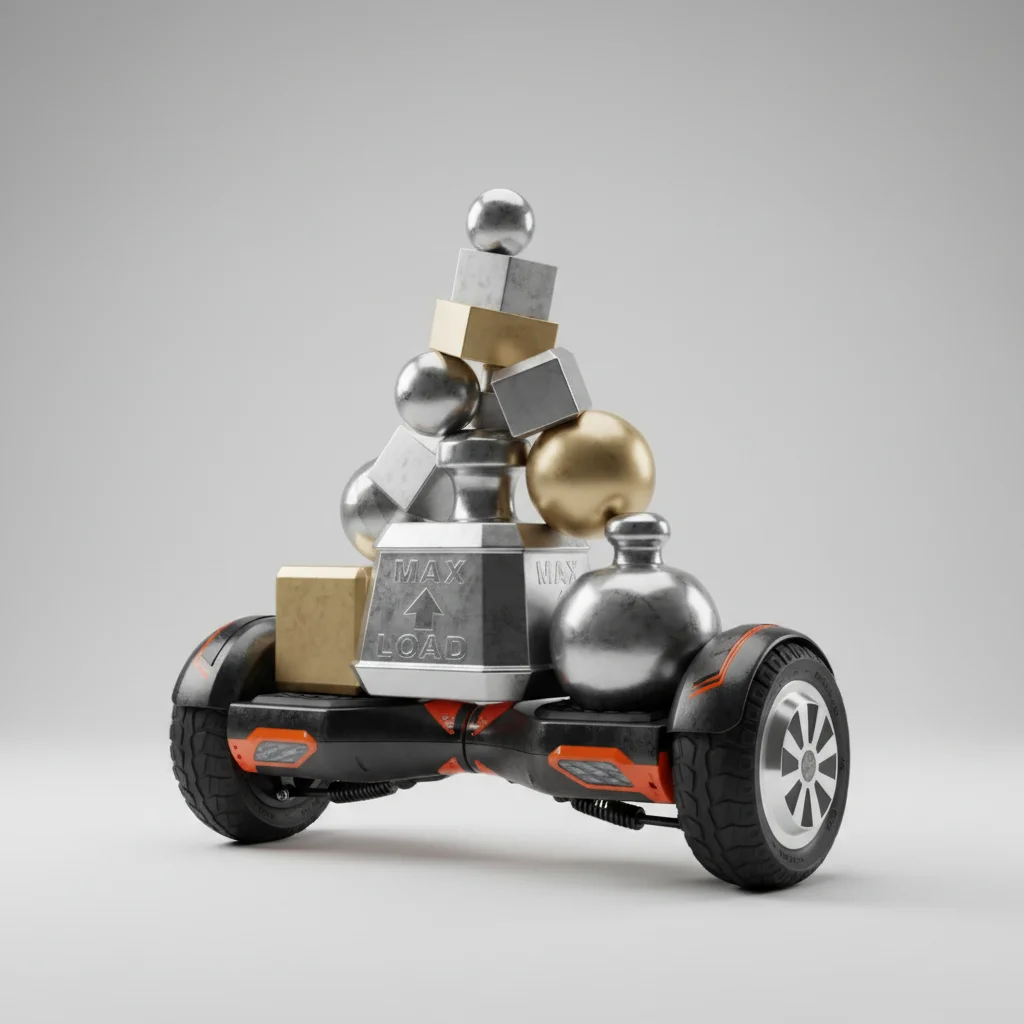
Most standard hoverboards can safely support a rider weighing up to 220 pounds (100 kg). However, heavy-duty models are designed to accommodate riders up to 400 pounds (181 kg), while some compact models have lower limits around 150 pounds (68 kg). Understanding these limits is crucial for both safety and the longevity of your device.
Why Weight Limits Matter for Hoverboards
Hoverboard weight limits aren’t arbitrary; they’re determined by the structural integrity of the frame, the power of the motors, and the durability of the internal components. Exceeding these limits can lead to several problems, including reduced speed and range, increased strain on the battery and motors, and even structural damage like cracks in the chassis. It can also compromise the self-balancing mechanism, making the hoverboard unstable and unsafe to ride.
Manufacturers rigorously test their products to establish these limits, ensuring optimal performance and safety within the specified range. Always check the manufacturer’s specifications before purchasing or riding a hoverboard.
Factors Influencing Hoverboard Weight Capacity
Several design elements contribute to a hoverboard’s maximum weight capacity. The materials used in the frame, such as reinforced aluminum or high-grade plastics, play a significant role. More robust frames can naturally withstand greater stress. The motor’s wattage and torque are also critical; powerful motors are better equipped to move heavier loads efficiently without overheating or premature wear. Furthermore, the size and type of wheels, along with the quality of the internal gyroscopes and sensors, all factor into the overall load-bearing capability and stability.
- Frame Material: Reinforced aluminum or high-grade composite plastics.
- Motor Power: Higher wattage and torque for increased load.
- Wheel Size and Type: Larger, more durable wheels often support more weight.
- Battery Capacity: Affects range and performance under heavier loads.
- Internal Components: Quality of gyroscopes and sensors for stability.
Choosing the Right Hoverboard for Your Weight
|
Our Picks for the Best Hover Board in 2026
As an Amazon Associate I earn from qualifying purchases.
|
||
| Num | Product | Action |
|---|---|---|
| 1 | Hover-1 My First Self Balancing Scooter for Kids with 5 mph Max Speed, Dual 150W Motors, 6.3” Tires, 3 Miles Max Range, and LED Headlights |

|
| 2 | INMOTION E20 Electric Unicycle Hoverboard for Beginners – 14" Wheel, 900W Motor, 18.6 Miles Range, 12.5mph, UL2272 Certified – Lightweight & Safe Self-Balancing Scooter |
|
| 3 | K1 Go-Kart Seat Attachment for Self-Balancing Scooters, Adjustable Frame Fits 6.5"/8"/10" Boards, Easy Install, Kids & Family Fun (Scooter Not Included)–Classic Black |
|
| 4 | LIEAGLE Hoverboard, 6.5" Self Balancing Scooter Hover Board with Bluetooth Wheels LED Lights for Kids Adults |
|
| 5 | Razor Hovertrax 2.0 Hoverboard, UL2272 Certified Self-Balancing Hoverboard Scooter, for Kids Age 8+ |
|
| 6 | Self Balance Scooter Seat Attachment 6.5” Two-Wheel Self Balancing Electric Scooter with LED Light Flash Lights Wheels |
|
| 7 | Gyroor Self Balancing Scooters Seat Attachment - Go Kart Conversion for 6.5'' to 10'' Self Balancing Scooters, Adjustable Frame Length, Perfect for Kids and Adults |
|
| 8 | Self-Balancing Scooter Skin Hoverboard Sticker Adult e Scooter Electric Scooter for Adults Reflective |
|
| 9 | 8.5” All Terrain Hover Board, Off Road Self Balancing Scooter with Bluetooth and LED Lights, UL2272 Safety Certified |
|
| 10 | K2 Self-Balancing Scooter Go Kart with Rear Shock Absorption, Balancing Scooter Seat Attachment for 6.5" 8" 10" Tires, Adjustable Length & Off-Road Wheel( (Not Including Balancing Scooter) |
|
When selecting a hoverboard, prioritize models that comfortably exceed your body weight, especially if you plan to carry a backpack or other items. For children, a standard model with a 150-220 pound limit is usually sufficient. Average adults should look for models in the 220-260 pound range for optimal performance and durability. For heavier adults, specific heavy-duty or “big and tall” hoverboards are available, often boasting capacities up to 400 pounds. These models typically feature stronger frames, more powerful motors, and larger, more robust tires.
Impact of Weight on Performance and Battery Life
Riding a hoverboard at or near its maximum weight limit will inevitably affect its performance. You’ll likely experience slower acceleration, reduced top speed, and a noticeable decrease in battery range. The motors will have to work harder, drawing more power from the battery, which can lead to shorter ride times and potentially reduce the overall lifespan of the battery if consistently pushed to its limits. For example, a hoverboard rated for 220 pounds might achieve 10 miles on a charge with a 150-pound rider, but only 7 miles with a 210-pound rider.
To maximize your hoverboard’s lifespan and performance, it’s always advisable to stay well within the recommended weight limits. This not only ensures a safer ride but also protects your investment.
Maintenance Tips for Heavy Riders
If you are a heavier rider, or frequently ride near the upper weight limit of your hoverboard, certain maintenance practices become even more critical. Regularly inspect the frame for any signs of stress or cracking, particularly around the footpads and wheel wells. Keep the tires properly inflated to the manufacturer’s recommended pressure, as under-inflated tires can increase drag and strain on the motors. Monitor battery performance closely; if you notice a significant drop in range or charging capacity, it might be time for a battery check or replacement. Also, ensure that all screws and fasteners are tight, as vibrations from heavier loads can sometimes loosen them over time.
Get our weekly buyer guide
Practical specs, not advice. Unsubscribe anytime.

I appreciate the info on different weight classes. I was hoping for a bit more detail on specific brands that offer the higher 400-pound capacity. It’s hard to find those models sometimes, and a few recommendations would have been super helpful. Still, it’s a good reminder not to push the limits on my current board.
Good breakdown on why weight limits are important. I used to think it was just about the frame, but the part about the self-balancing mechanism getting compromised makes a lot of sense. My son has a compact model with a 150-pound limit, and it’s good to know we’re keeping him safe by sticking to that. Definitely helps with understanding the longevity aspect.
I always wondered why my old hoverboard felt sluggish after a while. This really clarified that exceeding the 220-pound limit was probably the issue. I just got a new heavy-duty model that supports up to 400 pounds, and the difference is night and day. It’s so much smoother and I don’t feel like I’m stressing the motors anymore. Great info!
This was super helpful! I’m a heavier rider and was worried about finding a hoverboard that would actually last. Knowing that there are heavy-duty models designed for up to 400 pounds makes me feel much more confident in my purchase. I’ve had issues with reduced speed and range in the past, and now I know why. Thanks for the clear explanation!